8 Traditional Catalan Foods to Try in Barcelona (& Where to Find Them)

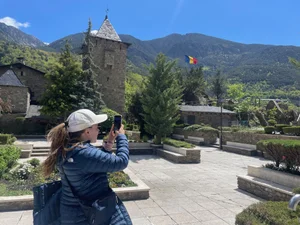
Catalonia is an autonomous region in the Northeast of Spain that extends into southern France. It is home to some of Spain’s most beautiful destinations, such as Barcelona, Costa Brava, and the Pyrenees. Visiting Catalonia should absolutely be on your bucket list, if it isn’t already.
The region is also rich in history and culture. In Barcelona, you can discover the awe-inspiring works of Antoni Gaudí such as La Sagrada Familia, Park Güell, and Casa Batlló. Figueres’ Salvador Dalí Museum, Tarragona’s Roman ruins, and the monasteries of Montserrat and Poblet are also beautiful treasures in Catalonia.
Your cultural dive into this region will not be complete without experiencing the delight that is Catalan cuisine—a reason alone to visit this enchanting province.
Read on to discover 8 traditional Catalan foods to try in Barcelona and where to find them.
Pan con Tomate
To begin this culinary journey, our first stop is a humble dish that is truly Catalan. Pan con tomate, also known as pa amb tomaquet, is a simple yet delicious dish found on many tapas menus.
To prepare pan con tomate, raw garlic is rubbed onto crusty bread, then a slice of ripe tomato is rubbed on top. Top it off with a drizzle of fresh Spanish olive oil, and you have an unassuming dish that bursts with flavor and is irresistible, bite after bite.
Most restaurants serve the finished product, but some offer a plate of the individual ingredients for you to make it yourself—a fun way to feel like a true Catalan. You will find pan con tomate across Barcelona, especially in tapas restaurants.
Grilled Meats/ aka Brasserie
One of the most traditional restaurants you’ll find in Catalonia is a brasserie. These rustic venues are my absolute favorite in both Barcelona and greater Catalonia and are also where you’ll find the locals—always the best indication of a good restaurant.
The rule of thumb at brasseries is nearly everything touches the grill. You’ll find the best regional meats on the menu, such as secret ibèric pork loin, botifarra pork sausage, churrasco de ternera beef short ribs, and even rabbit, which is called conejo.
Pro tip: On weekdays, many Catalan brasseries in Barcelona and beyond offer a prix fixe menu called the menu del día, which includes an appetizer, main course, dessert, coffee, and often wine. It’s a great value and an excellent way to taste a variety of authentic dishes.
Looking for an authentic brasserie in Barcelona? Try Restaurant Maur Urgell or Ca l'Estevet in El Raval.
Calçots
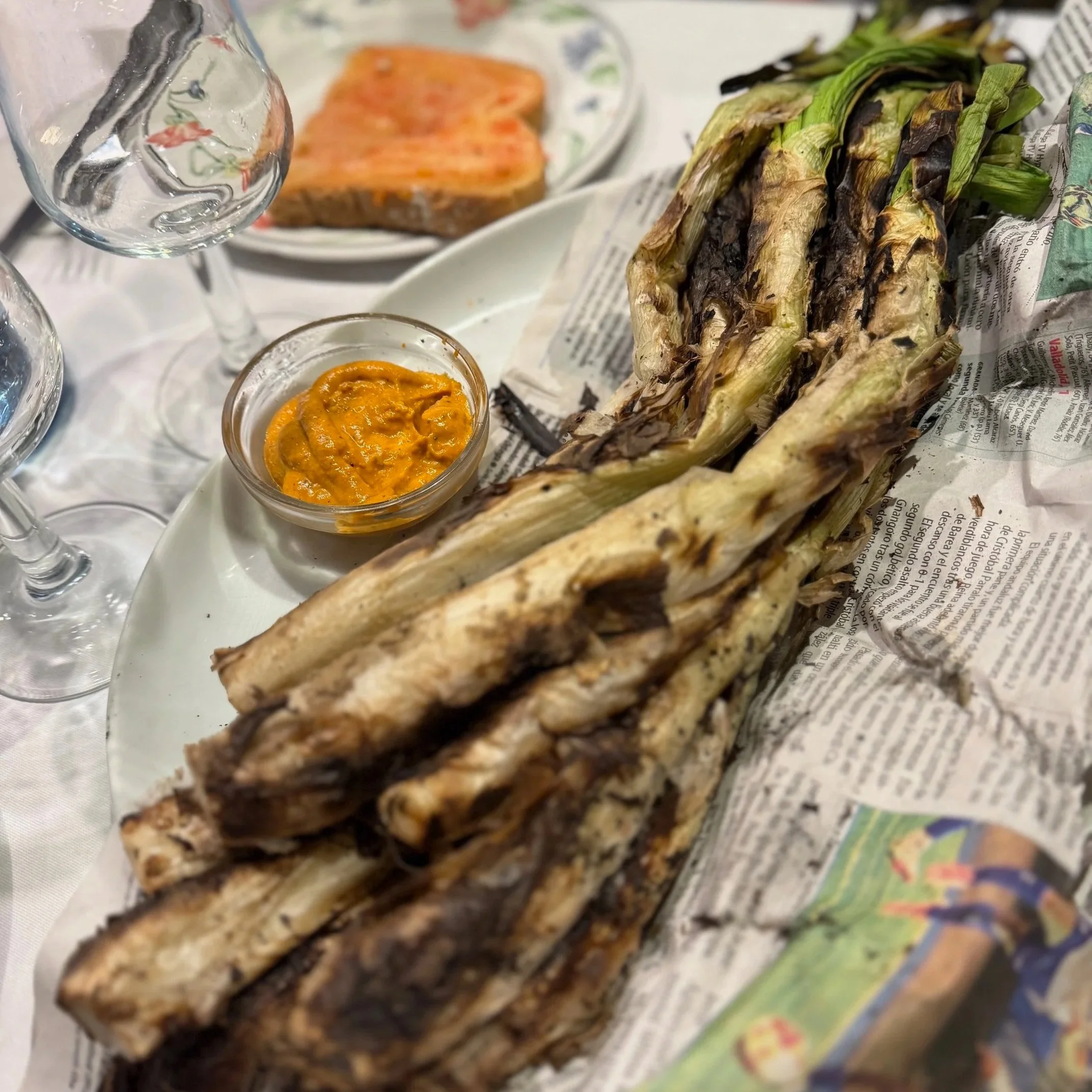
A simple and delicious vegetable harvested in the winter is the calçot. Calçots are green onions grown in the Valls region of Catalonia and resemble a cross between a traditional green onion and a leek. The origins of calçots in Catalan cuisine date to the 19th century, when a farmer accidentally burned some of his crop, revealing a tender, sweet interior.
Today, this is a beloved dish in Catalonia, prepared by fire-roasting the vegetable and then serving it with romesco, a Catalan sauce made with roasted tomatoes, various nuts, oil, and peppers.
Eating calçots is a bit of a messy experience, but don’t worry—restaurants provide gloves and a bib, adding to the fun.
You’ll find calçots available in winter to early spring at Catalan brasseries and traditional restaurants. In Barcelona, the restaurants Can Travi Nou and Can Cortada in the Horta-Guinardó district are famous for them.
Canelones de Carne
Moving into more hearty dishes brings us to savory canelones de carne. As you may have noticed, the name canelones closely resembles Italian cannelloni—a word which translates to “large reeds” and refers to the hollow tubes of pasta.
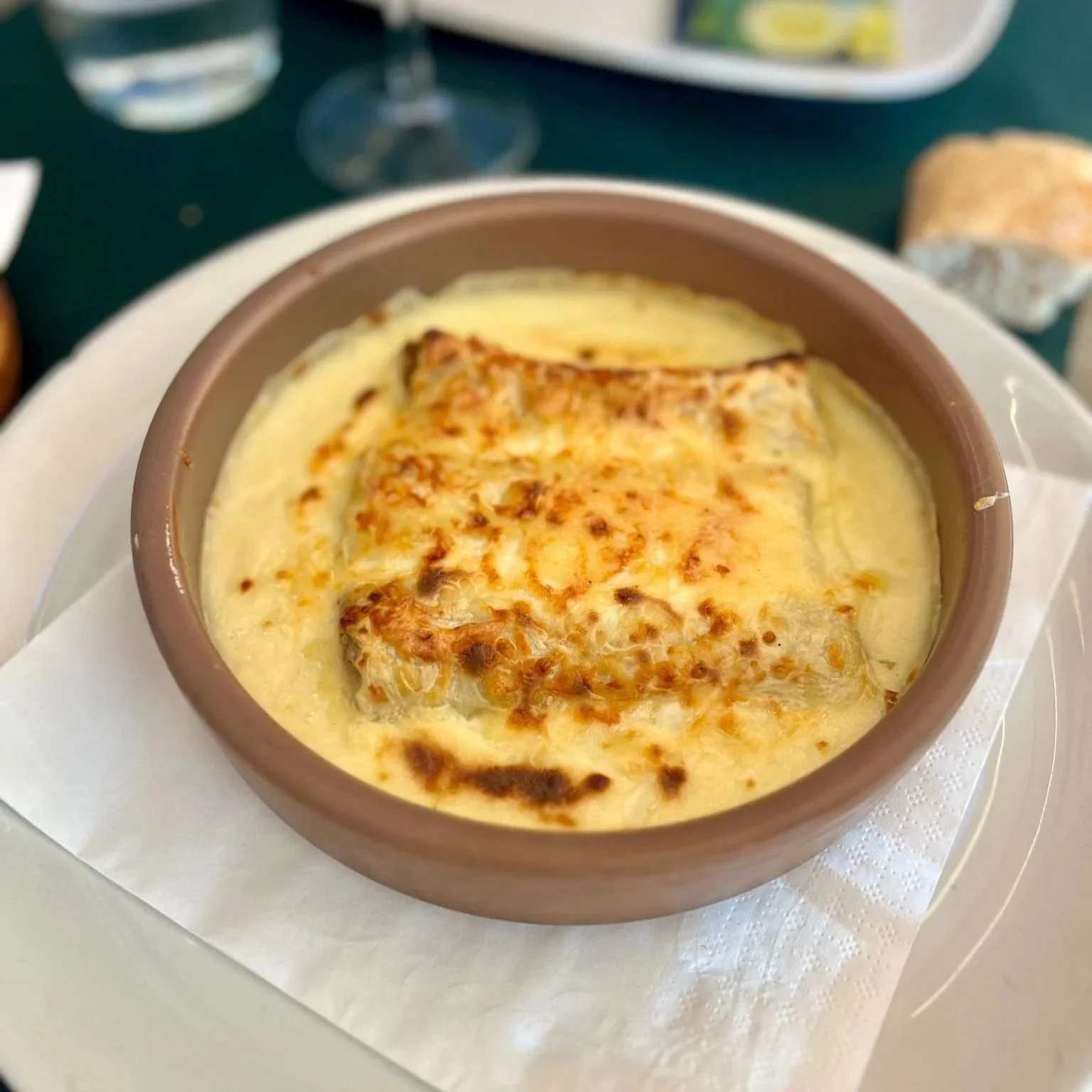
This dish was introduced to Catalonia by Italian chefs at the end of the 18th century. It gained widespread popularity in the 19th century and remains a staple today.
Traditionally, many Catalonians eat canelones de carne on Saint Stephen’s Day (December 26th), using leftover meat from the Christmas Day meal, but you’ll see them served year-round in many restaurants.
Because it is often a household dish, the meat chosen for the filling can vary, but it will be topped with creamy béchamel sauce and Parmesan cheese, then baked. This rich meal leaves you full and ready for a Spanish siesta!
Arròs a la Cassola
A close cousin to the famous Spanish paella, is a savory rice stew known as arròs a la cassola. This hearty meal is made in a casserole pan rather than a paella pan and uses arroz bomba rice, seasonal vegetables, and typical country meats such as chicken, rabbit, sausage, or pork chops.
In coastal areas, you’ll find seafood renditions of arròs a la cassola with locally caught prawns (known as gambas) and mussels (mejillones). Around Catalonia, arròs a la cassola is traditionally served in restaurants on Thursdays, but you’ll find many Barcelona restaurants serve it daily.
Visit Restaurant La Taverna del Coure in Barcelona's El Born district for traditional arròs a la cassola, paella, and tapas.
Mariscos
Given that a large area of Catalonia sits on the Mediterranean Sea, it is no surprise that a considerable portion of Catalan cuisine includes fresh seafood (mariscos) dishes.
In coastal towns, such as Palamós, you can find sardines (sardinas) and shrimp (gambas) caught right in the harbor and served fresh at restaurants with a view of the sea. Other delicious seafood offerings worth a try are prawns, razor clams, and traditional clams (called almejas).
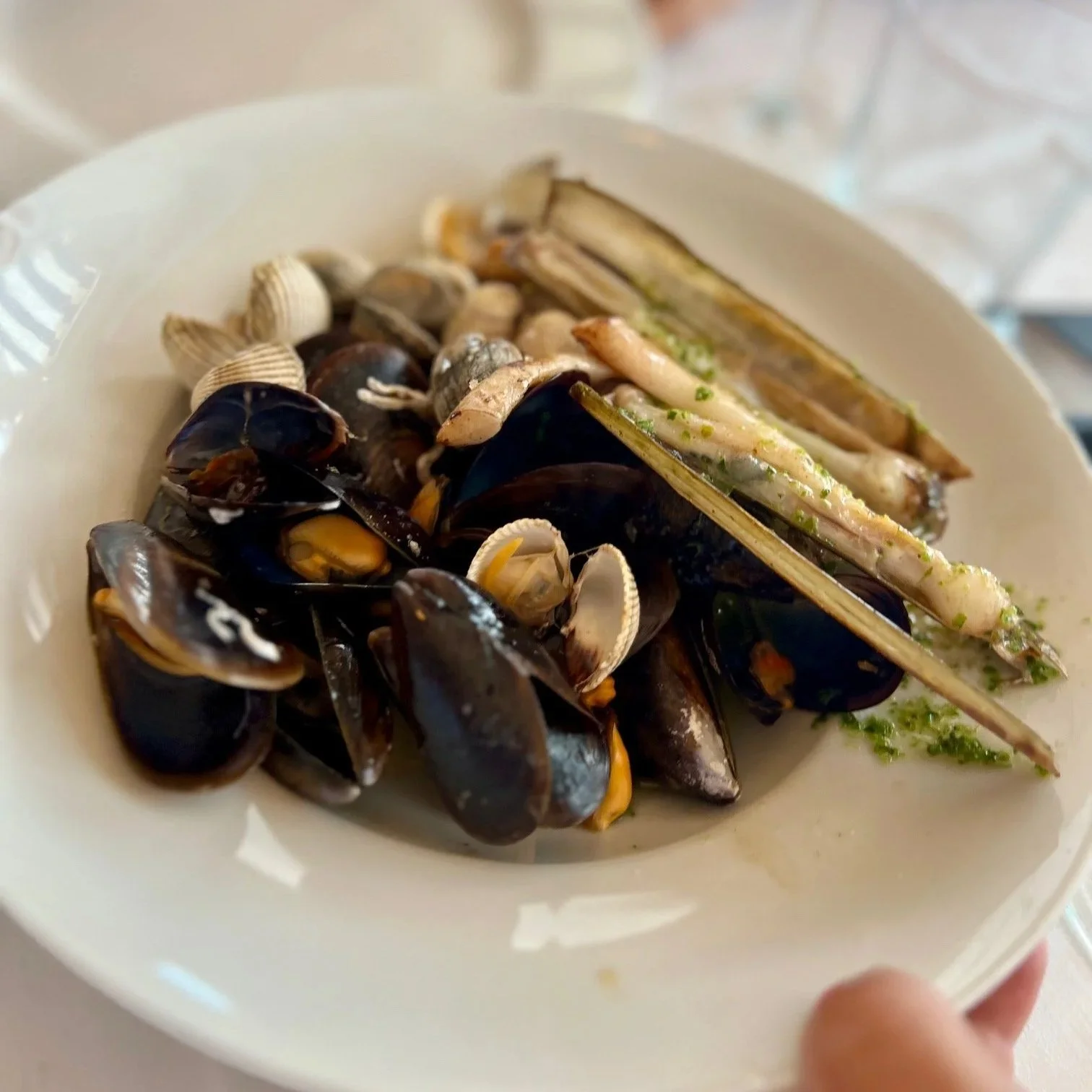
To taste delicious, fresh seafood in a less-touristy area of Barcelona, visit Monte Marinero in the Sarrià-Sant Gervasi district.
A fabulous seafood restaurant north of Barcelona in the Costa Brava region is Restaurant Can Quel in Palamós. They are situated next to the beach, with lovely views of the Mediterranean Sea.
Caragols a la Llauna
Move over, France! Spain’s snail dish is an adventurous culinary delight that will undoubtedly leave you craving more.
Known as a delicacy of Catalan cuisine, this dish originates from the Lleida region of Catalonia. Caragols (land snails) are cooked on a grill or in a traditional square baking pan known as a llauna. They can be served brushed with olive oil and salt or topped with aioli, tomato sauce, or a vinaigrette. Don’t let the shell deter you- these are truly delicious!
In Barcelona, visit the revered Can Cargolet in the San Antoni neighborhood to taste delicious cargols and calçots, in season.
If you venture north of Barcelona, near the historic city of Girona, stop by Restaurant Local Social Campllong to grab a table at my absolute favorite place for cargols.
Catalan Cream
Catalan cream or crema catalana has origins dating back to 1745 and closely resembles the French crème brûlée. While crème brûlée is made with cream, Catalan cream is made with milk and thickened with cornstarch. Another deviation from the vanilla flavors of crème brûlée is that Catalan crème often includes orange, lemon, or cinnamon flavors.
With a rich cream base and a crunchy caramelized top layer, this is a favorite dessert of locals. Many brasseries and tapas restaurants will have this on the dessert menu (or la carte del postre).
Catalan cream is also found in the city of Girona, where it is used as a filling in the Xuxio pastry, which is deep-fried and then covered in sugar. Pair it with locally produced dessert wine or a coffee, and you’ll have a sweet ending to a fantastic meal.
Now, go taste your way through Catalonia. Salut!
Published: January 12, 2025 - Updated May 20, 2026